Different Types of Generalized Onset Seizures
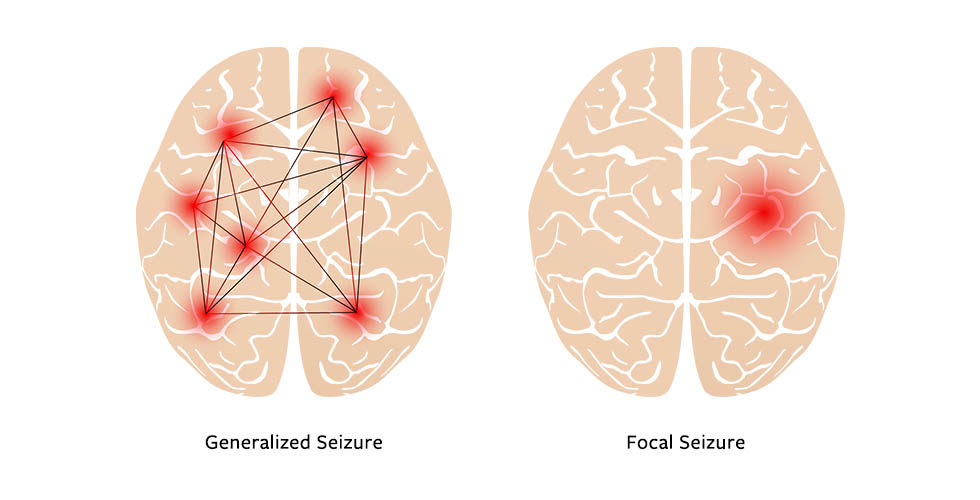
Generalized onset seizures are characterized by affecting both sides of the brain or groups of cells on both sides simultaneously.
This group includes various types of seizures where both sides of the brain are involved from the start, such as:
-
Tonic-Clonic Seizures
-
Absence Seizures (Non-Motor)
-
Atonic Seizures
For more detail, generalized onset seizures are often broken down into motor (involving muscles) and non-motor (absence) types.
This type of seizure is often what most people think of when they hear the word “seizure”. An older term for this type of seizure is “grand mal”.
As the name implies, tonic-clonic seizures combine two distinct phases: tonic (meaning stiffening) and clonic (meaning rhythmical jerking).
1. The Tonic Phase (Stiffening)
The tonic phase comes first:
-
Muscle Stiffening: All the muscles suddenly stiffen.
-
Vocalization: Air being forced past the vocal cords may cause a cry or groan.
-
Loss of Consciousness: The person loses consciousness and falls to the floor.
-
Injury Risk: The person may bite their tongue or the inside of their cheek; if this happens, saliva may look a bit bloody.
2. The Clonic Phase (Jerking)
After the tonic phase comes the clonic phase:
-
Rhythmic Jerking: The arms and legs begin to jerk rapidly and rhythmically, bending and relaxing at the elbows, hips, and knees.
-
Resolution: After a few minutes, the jerking slows and stops.
Note: Tonic-clonic seizures can start on both sides of the brain (Generalized Onset) or spread from one side (Focal to Bilateral Tonic-Clonic).
An absence seizure causes a short period of “blanking out” or staring into space. You may have heard it referred to by the older term, “petit mal” seizure.
Absence seizures usually affect only a person’s awareness of what is going on at that time. Both types are very short, and they often come and go so quickly that people may mistake them for daydreaming or not paying attention.
1. Typical Absence Seizures
These are the most common type of absence seizure.
-
Duration: They are hard to catch as they usually last less than 10 seconds.
-
Appearance: Someone experiencing a typical absence seizure stops all activity. It may look like they are simply staring off into space or have a blank look.
-
Subtle Movements: There may be some subtle movements such as fluttering eyelids or eyes turning upwards.
2. Atypical Absence Seizures
These are called atypical because they present with slightly different characteristics.
-
Duration: They can last up to 20 seconds.
-
Onset/Offset: They have a slower onset and offset (meaning they begin and end more gradually).
-
Symptoms: Like a typical absence seizure, it may look like the person is staring into space. Other potential symptoms include:
-
Changes in muscle tone
-
Fluttering eyelids or blinking
-
Lip smacking or chewing
-
Hand motions like rubbing fingers together
-
-
-
Myoclonic seizures are characterized by sudden, shock-like muscle jerks or twitches.
-
Duration: They usually last only a second or two.
-
Occurrence: There can be just one jerk, but sometimes multiple jerks will occur within a short time.
-
Affected Area: In epilepsy, myoclonic seizures usually cause abnormal movements on both sides of the body at the same time.
It is important to note that even people without epilepsy can experience normal myoclonus, such as hiccups or the sudden jerk that may wake you up as you are falling asleep. These normal occurrences are not seizures.
Syndromes Associated with Myoclonic Seizures
Myoclonic seizures occur in a variety of epilepsy syndromes that have different characteristics:
Juvenile Myoclonic Epilepsy (JME)
-
Involvement: Seizures usually involve the neck, shoulders, and upper arms.
-
Timing: They most often occur soon after waking up.
-
Onset: They usually begin around puberty or sometimes in early adulthood.
-
Treatment: In most cases, these seizures can be well controlled with medication, but it must be continued throughout life.
Lennox-Gastaut Syndrome (LGS)
-
Characteristics: This is an uncommon syndrome that usually includes other types of seizures as well.
-
Involvement: These myoclonic seizures usually involve the neck, shoulders, upper arms, and often the face.
-
Control: They may be quite strong and are difficult to control.
-
Onset: LGS typically begins in early childhood.
Progressive Myoclonic Epilepsies (PME)
-
Characteristics: This is a category of rare genetic syndromes.
-
Seizures: They feature a combination of myoclonic seizures and tonic-clonic seizures.
-
Progression: Treatment is usually not successful for very long, as the seizures cause damage over time. This damage may include worsening balance, coordination, and cognitive ability.
-
-
In an atonic seizure, part or all of the body may suddenly become limp. You may have heard these called “drop seizures” or “drop attacks”.
Key Characteristics
-
Duration: These seizures typically last less than 15 seconds.
-
Onset: They commonly start in childhood.
-
Focal vs. Generalized: While they are generally considered generalized, when the seizure starts in just one side of the brain (focal onset), only parts of the body may be affected.
Safety and Appearance
The sudden loss of muscle tone creates a significant risk of injury:
-
Falling: If standing, the person often falls to the ground like a ragdoll and could injure themselves.
-
Slumping: If sitting, their head or upper body may simply slump over.
-
Head Protection: To prevent injuries and falls, it is crucial to ensure the person is in a safe place. Head protection, such as a helmet or other protective gear, may be needed for those at high risk of falling.
Seizure Clusters
In some types of epilepsy (like Lennox-Gastaut or Dravet syndrome), seizures can happen in clusters with two or more occurring at a time. If a person is at risk for seizure clusters, they should talk to their doctor or nurse about ways to treat them.
Muscle “tone” is the muscle’s normal tension at rest. In a tonic seizure, the tone is greatly increased: the body, arms, or legs become suddenly stiff or tense.
Key Characteristics
-
Duration: They usually last less than 20 seconds.
-
Awareness: A person may remain aware during these seizures.
-
Timing: Tonic seizures usually happen during sleep.
Affected Area and Safety
Tonic seizures can be focal or generalized:
-
Generalized Onset: They usually involve all or most of the brain, affecting both sides of the body. If the entire body stiffens, the person can fall.
-
Focal Onset: If they start in one side of the brain, only a part of the body may stiffen.
-
Safety: Head protection, such as a helmet or other protective gear, may be needed if a person is at risk for falling.
Associated Syndromes and Diagnosis
-
Associated Syndromes: Tonic seizures are more common in people who have Lennox-Gastaut syndrome or other syndromes with mixed seizure types. These movements may also be seen in other neurological problems, especially in children.
-
Diagnosis is Key: It is very important to have a written description or video of what happens during a tonic seizure for a neurologist. Tonic seizures start suddenly with forceful movements. Events that start more slowly may be due to another condition.
Clonus refers to the fast stiffening and relaxing of a muscle that happens repeatedly. In other words, a clonic seizure is characterized by repeated jerking movements.
Key Characteristics
-
Movement: The jerking movements cannot be stopped by restraining or repositioning the arms or legs.
-
Duration: They only last a few seconds to 1-2 minutes.
-
Affected Area: Clonic movements may affect one or both sides of the body.
-
Distinction: Unlike a myoclonic seizure, the jerking in a clonic seizure is more regular and sustained. However, clonic and myoclonic seizures can be difficult to distinguish from one another.
Occurrence and Treatment
-
Rarity: Clonic seizures are rare and are most commonly seen in babies.
-
In Infants: In infants, clonic seizures are often very brief and do not happen very often. In fact, they could possibly go away on their own in a short period of time. If they do not resolve spontaneously, long-term treatment is necessary.
-
Combination: Most often, clonic movements are seen as part of a tonic-clonic seizure.