🧠 Focal Onset Seizures: Understanding Seizures that Start in One Area
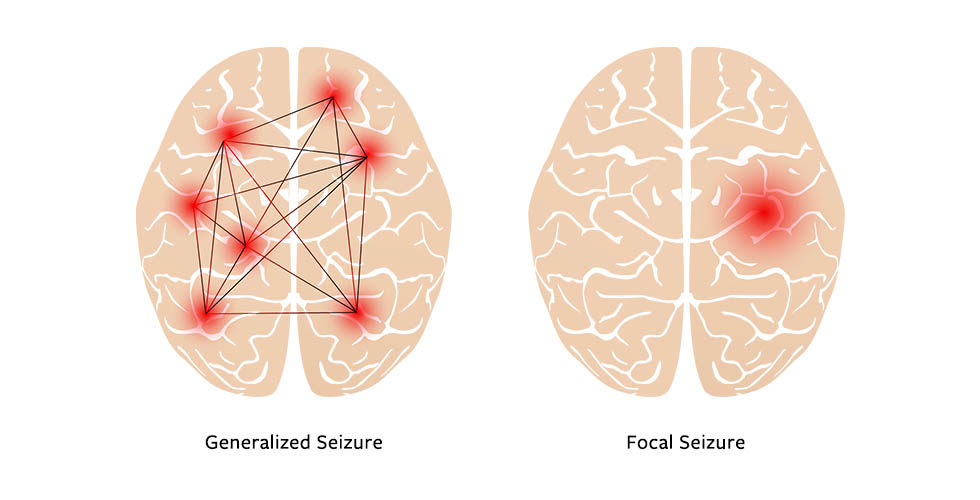
A focal onset seizure begins in one side of the brain, and it is the most common type of seizure experienced by people with epilepsy.
-
These seizures were previously called partial seizures.
-
The term “focal” is now used instead of partial to be more accurate when talking about where seizures begin.
Focal onset seizures are categorized into two groups based on how aware a person is of their surroundings during the event:
1. Focal Onset Aware Seizures
When a person is awake and aware during a seizure, it is called a focal aware seizure. This used to be called a simple partial seizure.
2. Focal Onset Impaired Awareness Seizures
When a person is confused or their awareness is affected in some way during a focal seizure, it is called a focal impaired awareness seizure. This used to be called a complex partial seizure.
During a focal onset aware seizure, the person is conscious and aware of their surroundings. This type of seizure was previously called a “simple partial” seizure.
Key Characteristics
A person experiencing a focal onset aware seizure is awake and alert.
-
Memory: They can usually recall what was happening during their seizure.
-
Duration: These seizures usually last less than 2 minutes.
Common Symptoms (Automatisms)
A person may experience various involuntary movements and feelings, sometimes called “automatisms”. Symptoms depend on which area of the brain the seizure is starting in and may include:
-
Jerking of arms or legs
-
A change in smell or taste
-
Dizziness
-
Seeing flashing lights
Causes
Focal aware seizures can happen to anyone. However, certain conditions may make a person more likely to experience them:
-
Head injury
-
Brain infection
-
Stroke
-
Brain tumor
Like many other seizure types, sometimes there may not be a known cause.
During a focal onset impaired awareness seizure, the person is not fully aware of their surroundings.
This type of seizure was previously known by several names, including “complex partial” seizure or even “psychomotor” seizure.
Key Characteristics
-
Awareness: Any change in consciousness—whether partial or complete unawareness of their surroundings—classifies it as a focal impaired awareness seizure.
-
Duration: These seizures typically last between 30 seconds and 3 minutes.
-
Origin: They commonly start in the temporal lobe or frontal lobe of the brain.
Symptoms and Behavior
A person experiencing this type of seizure may appear to be daydreaming or staring into space. They may also show repetitive, involuntary movements (called automatisms):
-
Chewing or lip smacking
-
Hand rubbing or fidgeting
-
Repeating words or phrases
-
Walking in circles or purposeful wandering
-
Freezing or remaining motionless
Progression of Seizures
-
Aura: Sometimes, a focal onset impaired awareness seizure begins with a focal onset aware seizure. In this scenario, the focal aware seizure is commonly called an “aura”.
-
Spreading: A focal impaired awareness seizure can sometimes spread to both sides of the brain. When this happens, it becomes a focal to bilateral tonic-clonic seizure.
When a focal onset seizure spreads to both sides of the brain, it is called a focal to bilateral tonic-clonic seizure.
This is different from a generalized onset tonic-clonic seizure, which starts on both sides of the brain simultaneously rather than just one. These seizures typically last 2–3 minutes and are more likely to happen to people who already have focal onset seizures.
The Three Phases of the Seizure
This type of seizure follows a clear progression:
1. The Focal Onset Phase
-
The focal onset seizure happens first.
-
Symptoms will vary depending on whether the person experiences a focal aware or focal impaired awareness seizure.
2. The Tonic Phase (Stiffening)
-
The tonic phase comes next, where all the muscles stiffen.
-
The person loses consciousness and falls to the floor.
-
Air being forced past the vocal cords may cause a cry or groan.
-
The person may bite their tongue or the inside of their cheek; if this happens, saliva may look a bit bloody.
3. The Clonic Phase (Jerking)
-
After the tonic phase comes the clonic phase.
-
The arms and legs begin to jerk rapidly and rhythmically, bending and relaxing at the elbows, hips, and knees.
-
After a few minutes, the jerking slows and stops.
Unknown Onset Seizures
It may be hard to tell if a tonic-clonic seizure starts as focal or generalized onset, especially if they happen during sleep or are not seen by anyone else. These are sometimes called unknown onset tonic-clonic seizures.
An aura is the term some people with epilepsy use to describe the feeling that warns them they’re about to have a seizure.
Technically, an aura is actually a focal aware seizure that starts in one side of the brain. The seizure then spreads to affect both sides of the brain, becoming a generalized seizure. Some people who experience focal aware seizures on their own also refer to them as auras.
🧠 Common Aura Symptoms
The symptoms experienced during an aura will depend on the part of the brain where the seizure starts. They can be very subtle and may include:
-
A change in smell or taste
-
A feeling of nausea
-
A change in sensation or movement
-
The eyes or head turning forcefully to one side
The key characteristic is that the person is fully aware of what’s happening at this point.